
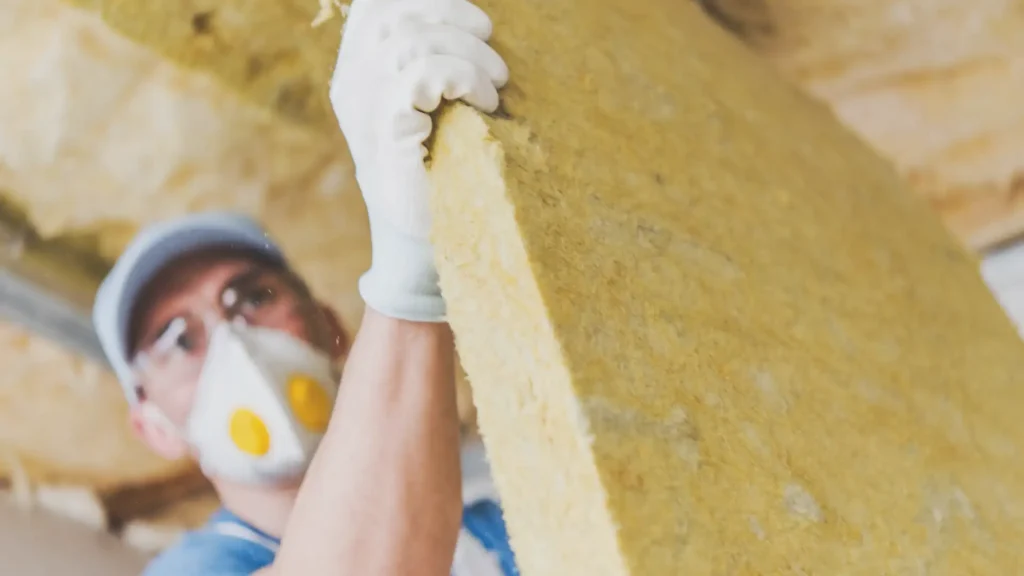
A flat roof without proper insulation is costing you money every month. Heat escapes in winter and pours in during summer, driving up energy bills and putting unnecessary stress on your HVAC system. Understanding which insulation type fits your Fort Worth property is the first step toward fixing that.
As a BBB-accredited roofing contractor with an A+ rating, Texas Select Construction has insulated flat roofs across the DFW area using both rigid board and spray foam systems. Below, we break down what each flat roof insulation type offers and how to choose the right one for your building.
Key Points
- Rigid board insulation (XPS, EPS, ISO) is cost-effective and easy to install on flat roof decks
- Spray foam insulation expands to fill gaps, offering superior air sealing and thermal resistance
- The U.S. Department of Energy recommends R-38 to R-60 for flat roofs in the Fort Worth area
- Proper insulation reduces energy costs, prevents moisture buildup, and extends roof lifespan
What Kind of Insulation Is Best for a Flat Roof?
There are two main types of insulation used in flat roofs: rigid board insulation and spray foam insulation. Each has distinct advantages depending on your building’s use, your budget, and how much thermal resistance you need.
Rigid Board Insulation
Rigid board insulation consists of panels installed on top of the roof deck, between the roof membrane and the roofing substrate. This type of insulation is popular because it is cost-effective, easy to install, and provides excellent thermal resistance. The most common materials used for rigid board insulation include extruded polystyrene (XPS), expanded polystyrene (EPS), and polyisocyanurate (ISO).
Rigid boards work well on commercial flat roofing systems where large surface areas need consistent coverage without gaps. ISO boards, in particular, offer one of the highest R-values per inch of any rigid insulation material.
Spray Foam Insulation
Spray foam insulation is applied directly onto the roof deck and expands to fill any gaps and crevices. It is made of a combination of isocyanate and polyol resin, which react and expand when mixed together. Spray foam roofing systems offer exceptional thermal resistance and act as a superb air barrier, making them ideal for highly energy-efficient buildings.
Because spray foam conforms to irregular surfaces and seals penetrations, it is especially effective on older flat roofs where rigid boards may leave gaps around pipes, vents, and HVAC curbs.
Ultimately, the choice between rigid board and spray foam depends on factors such as the climate, the building’s intended use, and the project budget. A certified roofing contractor can assess your roof deck and recommend the right system for your situation.
How Flat Roof Insulation Affects Energy Efficiency
One of the primary benefits of proper flat roof insulation is energy efficiency. Insulation helps prevent heat from escaping during the winter and keeps the building cool in the summer. In Fort Worth, where summer temperatures regularly exceed 100 degrees, the right insulation can significantly reduce cooling costs.
The U.S. Department of Energy recommends an R-value of R-38 to R-60 for flat roofs in Fort Worth, Texas. The R-value measures thermal resistance, with higher values indicating better insulation performance. The exact R-value required depends on the climate zone and the building’s intended use.
Proper insulation also reduces the environmental impact of your building. By lowering energy consumption, buildings with adequate insulation produce fewer greenhouse gas emissions and conserve natural resources.
Roof Insulation vs. Attic Insulation: What Is the Difference?
Both roof insulation and attic insulation play important roles in maintaining a building’s energy efficiency and comfort levels. Workers apply roof insulation directly onto the roof deck, while attic insulation is installed on the ceiling of the top floor, between the living space and the attic.
Roof insulation is essential for flat roofing systems because flat roofs typically lack attic space. Without insulation applied directly to the deck, heat transfers through the roof membrane and into the building below. Attic insulation, on the other hand, helps prevent heat from escaping through the ceiling of the top floor in structures with pitched roofs and attic cavities.
While both types of insulation serve different locations and purposes, they work together to create a complete thermal envelope for the building. Inadequate insulation in either area leads to higher energy costs and decreased indoor comfort.
R-Value Requirements Differ by Location
The recommended R-value for roof insulation and attic insulation may be different because the heat transfer mechanisms vary. Roof insulation primarily addresses conductive heat transfer, while attic insulation primarily addresses convective heat transfer. Consulting a professional to determine the right R-values for each area, based on your location and building purpose, is essential.
Preventing Moisture Buildup and Mold Growth
In addition to maintaining energy efficiency, proper insulation in both the roof and attic areas helps prevent moisture buildup and reduces the risk of mold growth. Warm, moist indoor air can condense on cold roof or attic surfaces, causing moisture problems over time. Proper insulation creates a barrier between the warm, moist air and the cold surface, protecting the structural integrity of your roof.

Frequently Asked Questions About Flat Roof Insulation
How much does flat roof insulation cost?
Costs vary depending on the insulation type, roof size, and existing conditions. Rigid board insulation generally costs less per square foot than spray foam. A professional roof replacement estimate will include insulation as part of the total project cost.
Can you add insulation to an existing flat roof?
Yes. During a re-roofing project, new insulation boards can be installed on top of the existing deck before the new membrane goes down. Spray foam can also be applied to the underside of the deck from inside the building in certain configurations.
How long does flat roof insulation last?
Most rigid board and spray foam insulation products last 20 to 30 years or longer when properly installed and maintained. The insulation should be inspected any time the roof membrane is serviced or replaced.
Get the Right Insulation for Your Fort Worth Flat Roof
Choosing the right insulation for your flat roof has a direct impact on your building’s energy efficiency, comfort levels, and long-term maintenance costs. Rigid board insulation and spray foam insulation are both proven options, and the best choice depends on your specific roof, building use, and budget.
As an Owens Corning Certified Contractor and member of the North Texas Roofing Contractors Association, Texas Select Construction installs flat roof insulation systems built for the Fort Worth climate. Contact our team today to schedule your free roof assessment and find out which insulation system is right for your property.